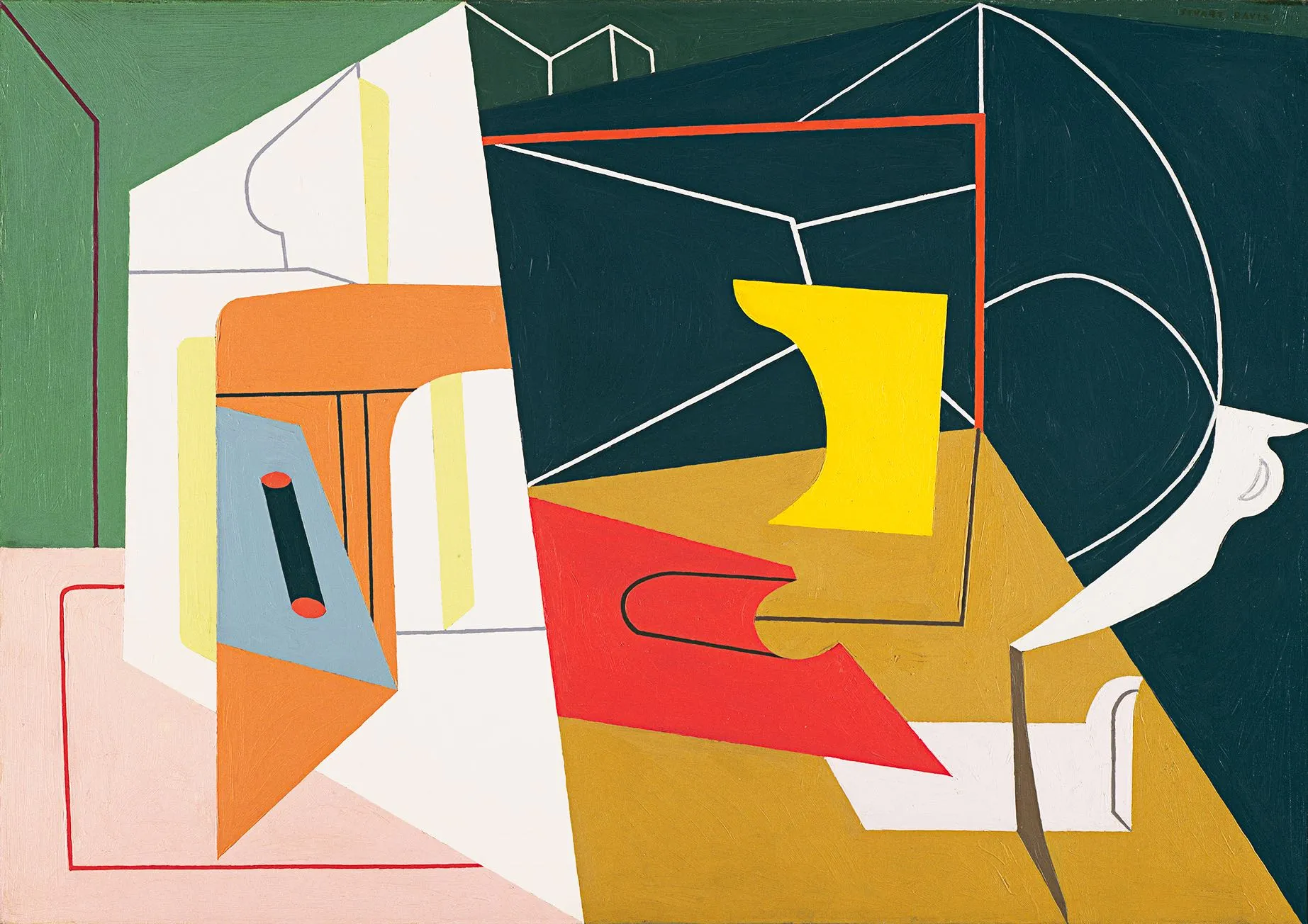

Stuart Davis, one of the most inventive American modernists of the twentieth century, built his paintings the way a sign painter builds a sign: as flat shapes of pure, unmixed color that click together like puzzle pieces. Look closely and there’s no shading, no gradient, no attempt to model form the way a Renaissance painter would — a red shape is simply red, edge to edge, and it butts up against a yellow shape that is simply yellow. Objects, storefronts, gas pumps, even letters of text dissolve into these interlocking color blocks, held together by clean black or white outlines that keep every plane legible.
That’s the real lesson here. Davis wasn’t coloring in a drawing — he was thinking in color from the start, treating each shape as a color decision, not a shape you fill in afterward. Paintings like Hot Still-Scape for Six Colors – Seventh Avenue Style show how just a handful of flat hues, carefully balanced against each other, can create contrast, rhythm, and a crisp sense of what’s foreground and what’s background — without a single blended tone anywhere on the canvas.


