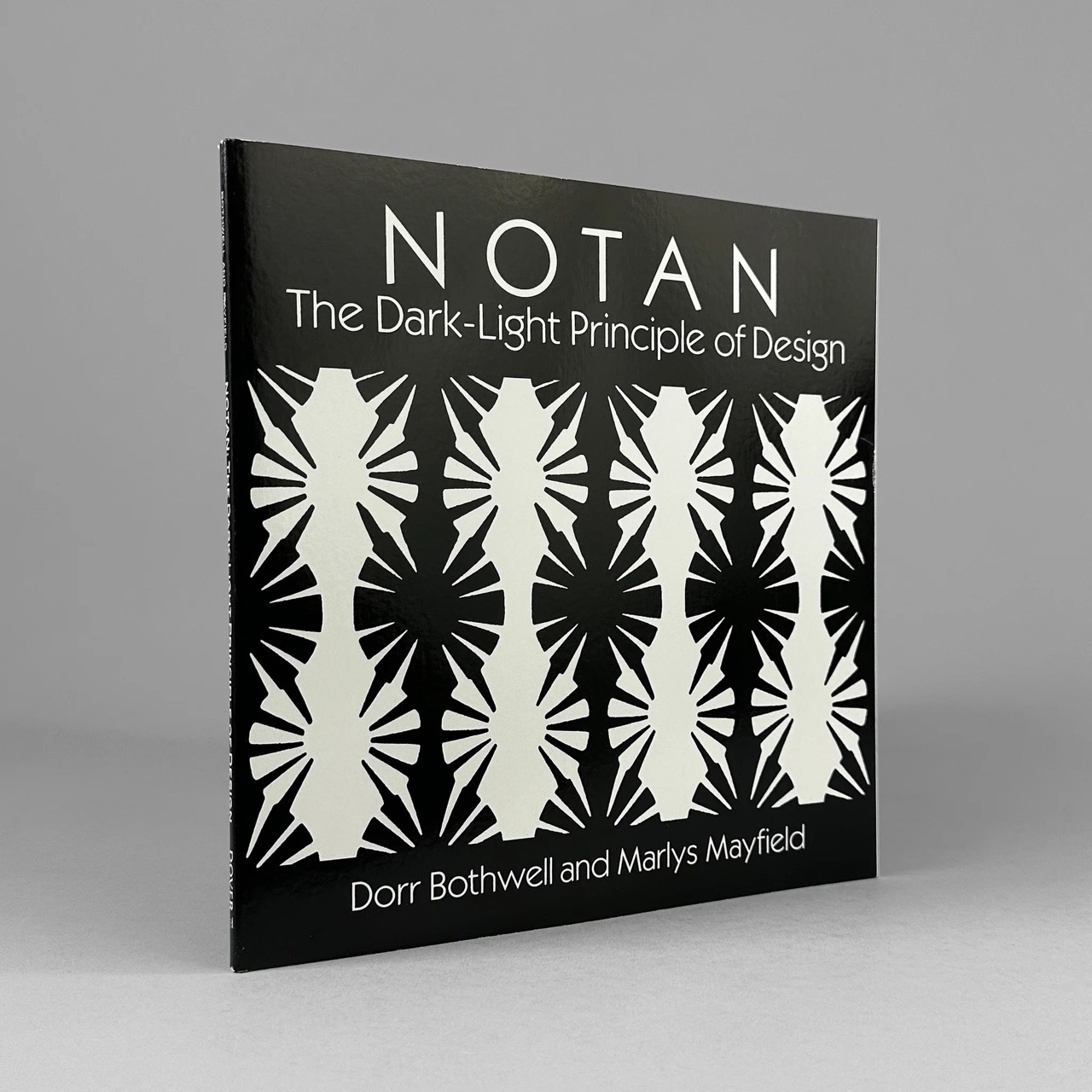

This tutorial is indebted to Dorr Bothwell’s book Notan. When I first read it, it stirred strong emotions within me. Here we have design principles with feeling, intuition, and genuine substance. The meditation on positive and negative space is one of the more fruitful within the realm of design (or any of the arts for that matter). Below are my adaptations of two of her exercises, modified for the template we’re using in class.
Expanding The Square
Elements:
- One 6×6 inch black paper square.
- A variety of shapes (geometric, organic, angular, etc)
Rules:
- You must cut shapes along each edge of the black square
- The cut shape must be placed outside the square to mirror the void it left behind. These shapes can be further cut — keep mirroring each time.
- Always preserve the corners and the overall silhouette of the square.
- Due to our template, shapes along the top or bottom edge must not be cut longer than 2 inches. Cut elements along the left and right sides of the square cannot be longer than 3 inches.

Here you can see my roughed out template with sketched in dimensions and black 6″x6″ square. Your template should look cleaner than this — this was my mockup.

Here you can see my first cut shape — mirrored above and below. I further cut out a smaller piece from the cut shape and mirrored it left and right. Everything you cut away must be added next to the cut away section.
Note: To keep things flexible I recommend adding just a bit of tape to the back of the paper to keep it in place but providing you with a chance to change things still before they are glued down.

I’m attempting to contrast that first shape with a shape that has a very different form (geometric shapes, more negative space, etc). Here you can see that second shape cut out and mirrored.

I wanted the next shape to be very different from the first two. I went with a kind of crescent moon shape. I further added another cutaway to the moon to echo the small cutaway on my first shape.

I wanted to go further with a very large and smooth shape so I went with a half circle for the cutaway. My compass was in another room and I was feeling lazy so I used the inside of my painter’s tape as a guide to draw the circle. Here’s how the circle turned out.

One thing to be careful of is the area circled in red above. Do not start overlapping previously cutaway shapes, especially if they are on another edge of the composition. Here a j-like hook shape was cut away and crossed over the crescent. In addition to being too long to fit in my composition, the shape just feels awkward cutting through the space reserved for the crescent. Keep it simple and just avoid cutting over other shapes in this way.
Figure Ground Equality
Elements:
- 2×4″ black strips of paper
- A variety of shapes (geometric, organic, angular, etc)
Rules:
- Black and white shapes should feel equal in intensity and energy — neither reads as simply figure on ground. Ideally, both could be read as figure or ground simultaneously.

Cut 5 pieces of black paper 2×4 inches. Fold each piece of paper in half horizontally and half vertically. Above you can see the piece of paper folded in this way. The line drawing you see in this section of the paper should be one continuous line depicting a variety of shape types — wide, narrow, curved, angular. It is a short passage but it will determine how dynamic the rest of your work will be in this portion of the project. Take your time and draw a line with variety and contrast. Here is the paper folded back out so you can see the section in relationship to the whole paper.
Once you are satisfied with your line fold your paper as instructed above and cut through each layer of the folded piece with an X-Acto knife or scissors. Make sure to hold the paper tightly to avoid slippage or shifting of the forms that you are cutting out.

Because you cut through all of the paper at once when it was folded, you should have a final result with left to right and top to bottom symmetry.

Use this first cut piece as a template to trace and cut out 4 additional identical pieces.

Here is my test template showing top and bottom exercises. The piece on top should be developed further than shown here — this is only meant to demonstrate the technique. The measurements visible on the template are just my working notes from sketching out the project — your final template won’t need those. On the left you can see an example of cutting through the folded paper when working on the bottom design.