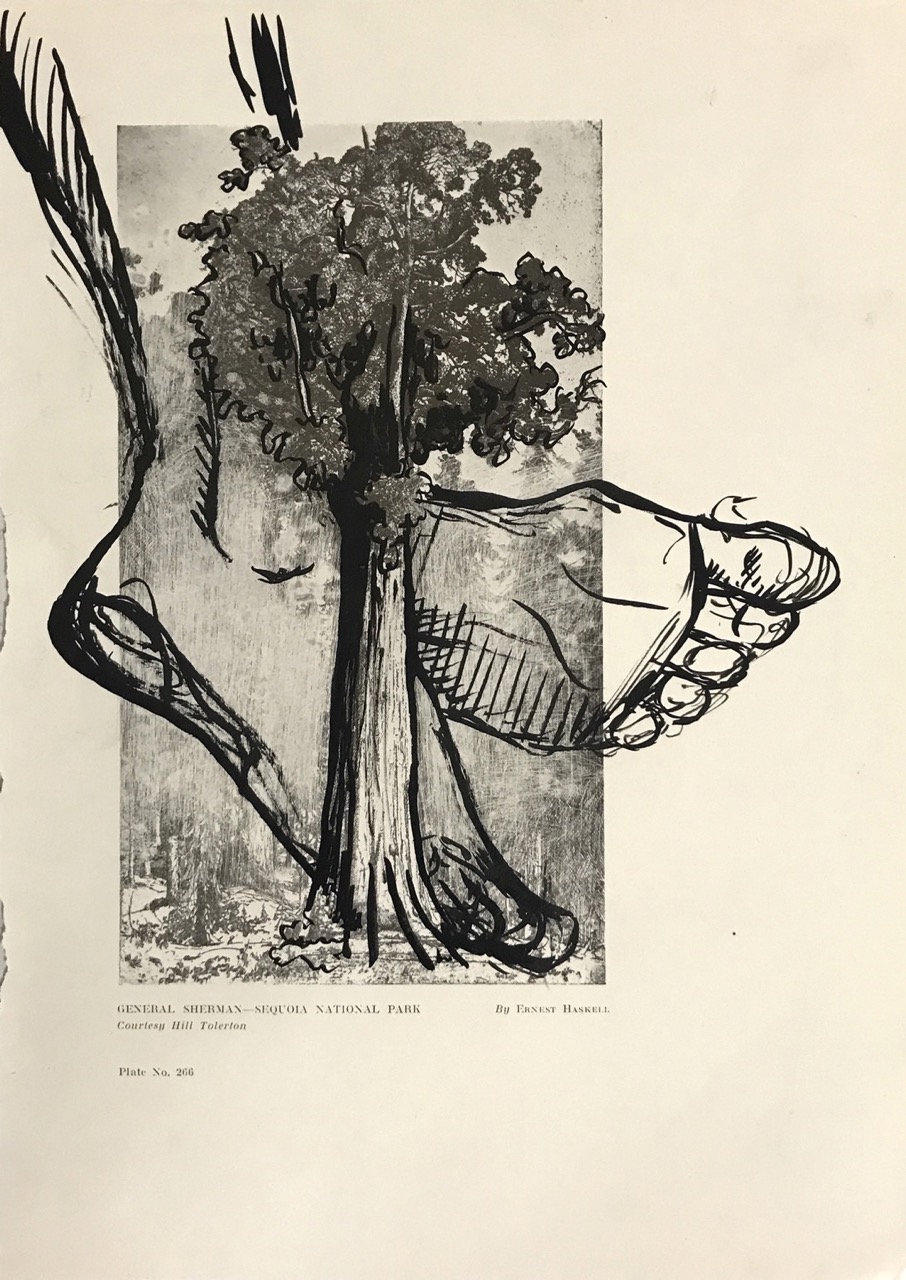

The key to successful art is contrast. It’s what makes black and white work satisfying — the simple opposition of values. Warm against cool is another well-established contrast in drawing and painting. But the types of contrast an artist might pursue are really quite vast: soft edge versus hard edge, finished versus unfinished, the drawn line versus the painted shape, loose versus refined, depth versus flatness. The list goes on. One technique like linear perspective, whose goal is to create the illusion of depth, becomes much more interesting when the same drawing contains areas that are intentionally flat — whether to create tension within the picture plane or to reinforce the depth by contrast. Contrast is the pause between the notes in the music. The salty note in the sweet dish. The open space that punctuates the nonstop busy schedule of the day. It might not be that variety is the spice of life after all — contrast is.
Here are some student drawings, paintings, and prints that came to mind when I thought about this. The first images in black and white are drawings that juxtapose decorative spaces with naturalistic three-dimensional modeling of form. In all the examples you can ask yourself: what is the contrast in this image? It becomes an interesting lens. Consider your own work through it as well.


