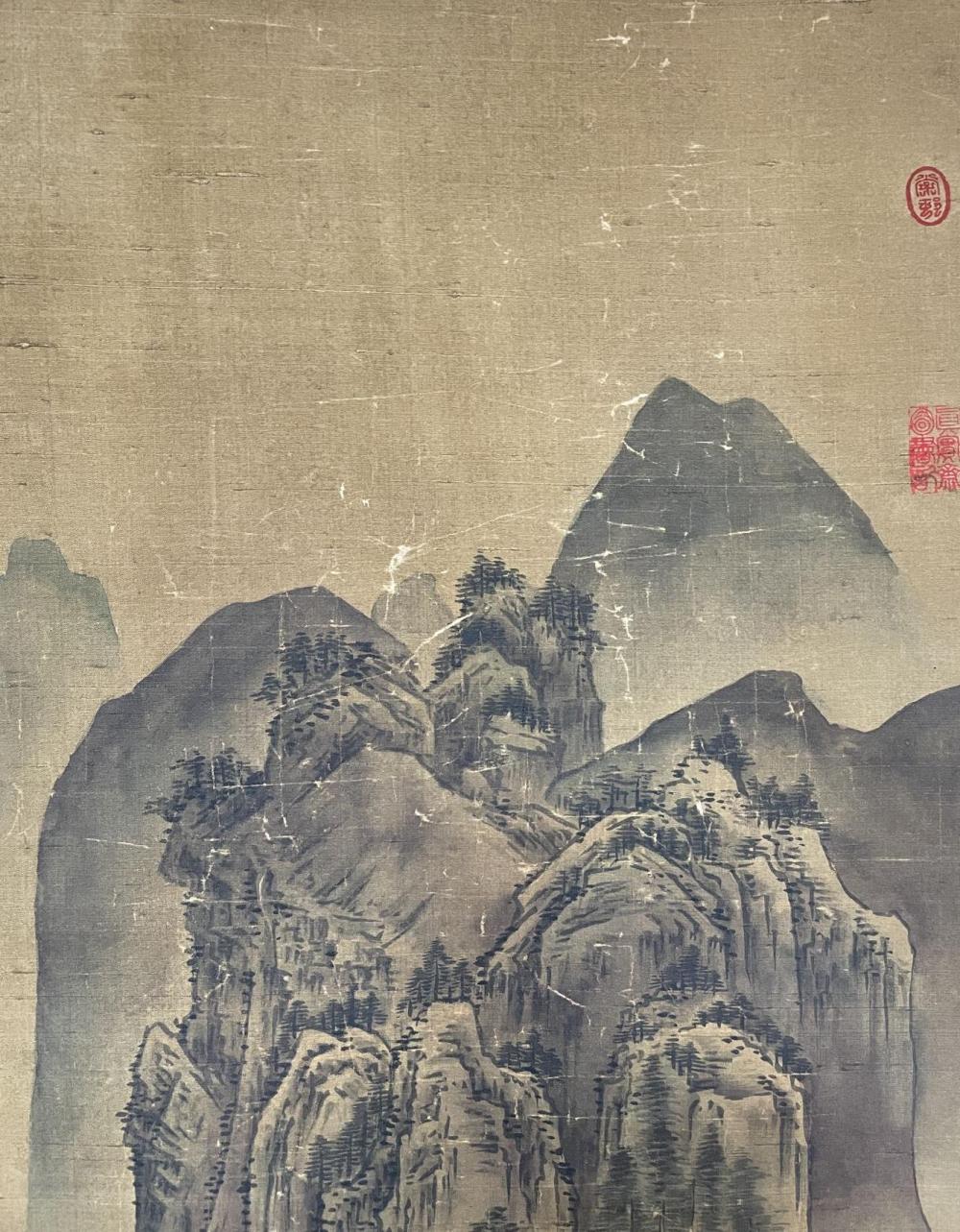

The Song Dynasty (960–1279) and the Qing Dynasty (1644–1912) produced an incredible range of ink painting, often on silk. Song dynasty ink painting is widely considered the high point of the Chinese landscape tradition. The dominant mode was monumental landscape — vast, often misty compositions in which humans appear tiny against overwhelming natural forces. Artists like Fan Kuan, Guo Xi, and Ma Yuan developed highly refined approaches to depicting mountains, water, and atmosphere. Guo Xi’s essay Essay on Landscape Painting is one of the great documents of this tradition, describing how a landscape should make the viewer feel they could actually enter and wander through it. There was a deep philosophical underpinning rooted in Daoist and Buddhist thought — nature as something to be contemplated and inhabited rather than merely depicted. The brushwork was varied and expressive, and atmospheric perspective was handled with extraordinary subtlety, often through the use of empty space and mist to separate spatial planes.


I wanted to share this work in regards to atmospheric perspective – the disappearing of contrast and detail as forms fade into the distant mist. These craggy landscapes also remind me a bit of some of Leonardo da Vinci’s cryptic backgrounds, like that in his Virgin of the Rocks painting (see below).
